
5801 W 44th Ave Unit C, Denver, CO 80212, United States

Crowns
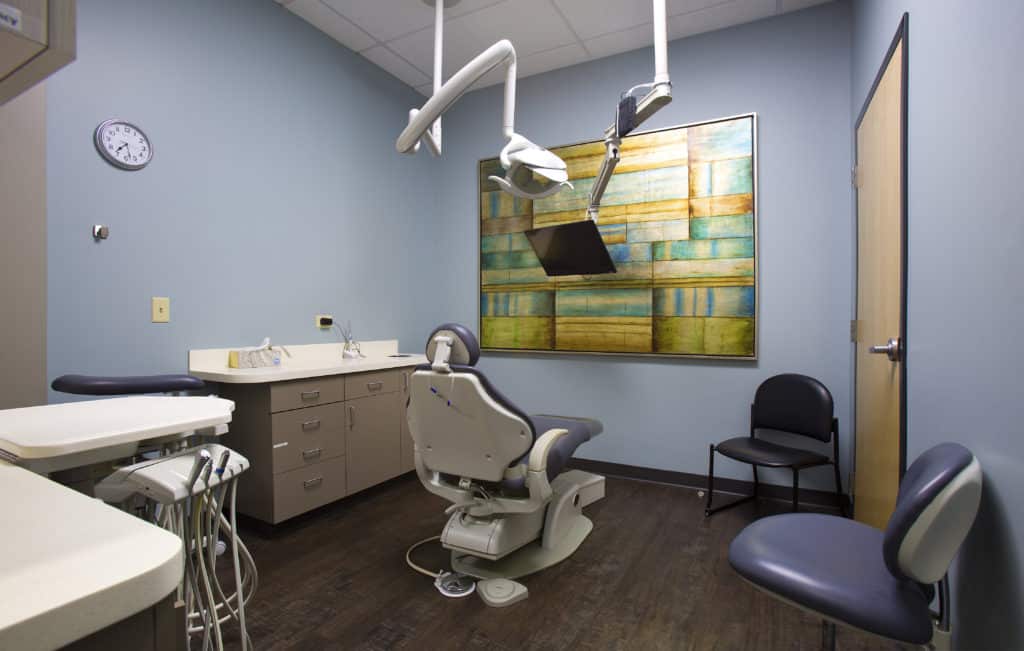
A dental crown is a restoration that may be used for several dental conditions. Most commonly, a crown is used to restore a tooth that has been damaged or decayed to the point that a dental filling will not provide a successful restoration. A crown is custom-made by your trusted dentist in Denver to fit over the entire tooth, starting at the gum line. It restores a tooth to its normal size, shape, and function.
A crown may be appropriate if you have:
- A cavity that is too large for a filling
- A missing tooth that will be replaced with a bridge
- A dental implant
- A root canal — the crown will protect the tooth from cracking or breaking after the root canal treatment
- A tooth that has been cracked, worn down, or otherwise damaged.
A crown is generally made of gold, porcelain, or porcelain fused with metal. Porcelain crowns are popular because they match the natural appearance and color of your teeth. Our dentists will help you determine which type of dental crown is best for your situation.
Several steps are involved in placing a crown, and generally, two dental appointments are needed. The tooth will be prepared by removing the outer portion so the crown will fit over the top of it. An impression will be taken and used to create a custom crown. A temporary crown will then be made and placed over the prepared tooth to protect it while the permanent crown is being made. At a second appointment, usually within a week or two, the temporary crown will be removed and the permanent crown will be fitted over the prepared tooth. When you and your dentist are both satisfied with how the crown looks and feels, it will be cemented into place. With proper care, crowns can be a wonderful long-lasting restoration option.
Discover frequently asked questions about dental crowns today, and contact your trusted dentist today with any additional questions!
Root Canals
A root canal is a type of endodontic therapy. Endodontics is the branch of dentistry that deals with treating diseases or injuries to the dental pulp. The pulp is the soft tissue within a tooth that contains the blood vessels and nerves. If the pulp becomes inflamed or infected, treatment is needed. The most common reason the pulp becomes infected is because of a deep cavity or filling, a cracked or broken tooth, or a serious injury to a tooth. Any of these situations can allow bacteria to enter the pulp of the tooth. Contact your trusted dentist in Denver today to schedule an appointment!
If a damaged or diseased pulp is not treated, the infection can spread to the tissue surrounding the tooth. Generally, pain and swelling are a result. A common indicator of infection is an abscess along the gumline of a tooth. Even if there is no pain, the infection can spread and damage the surrounding bone tissue. Without treatment by our experienced dentists in Denver, this type of infection will likely cause the tooth to die and necessitate its extraction.
During root canal therapy, the infected pulp or nerves of the tooth are removed. Each root canal is cleaned and shaped, and then filled with a rubber-like material. Depending on the extent of the infection, antibiotics may be prescribed and a temporary filling placed in the tooth. During the next step, the temporary filling will be removed and a permanent filling or crown will be placed on the tooth. A crown is usually recommended to protect a tooth that has had root canal therapy. A tooth that has had a root canal can become brittle and may become prone to breaking over time, and a crown will help prevent this from happening.
Contact our Primary Dental root canal dentist in Denver for more information!
Bridges
Dental bridges are used to replace a missing tooth or teeth. If you are missing a tooth or multiple teeth in a row, a dental bridge may be recommended by our experienced dentist in Denver. Missing teeth in your mouth is a serious issue. Teeth are meant to work together, and when one or more are missing, the surrounding teeth can tilt or drift into the open space.
This causes multiple problems. It can affect your bite and place stress on your teeth and jaw joints, causing pain and damage. Teeth that have tipped or moved into the space of a missing tooth become harder to clean. This increases the chance of tooth decay and gum disease. Also, when a tooth is missing, the bone it sits in may begin to shrink. This can change the way the jaw bone supports the lips and cheeks, causing a “sunken” look to the face.
A dental bridge is a fixed restoration, meaning it is non-removable. It is anchored into place through the use of two crowns on either side of the missing tooth/teeth. These crowns hold an artificial tooth or teeth in place, creating a “bridge” to fill the space of the missing tooth/teeth. These crowns can be placed on existing teeth or implants by your dentist in Denver.
The placement of a bridge usually requires two dental appointments. During the first appointment, the dentist will prep the two anchor teeth just as would be done for a crown. Next, a dental impression will be taken. This will be sent to the lab that will make a custom bridge to fit your needs. The dentist will then place a temporary bridge over the prepped area to protect your mouth. Contact our dentists in Denver today to schedule an appointment!
TMJ (Temporomandibular Joint) Treatments
The temporomandibular joint is a hinge that connects your jawbone to the temporal bones of your skull, just in front of your ears. This hinge joint allows you to move your jaw up and down and side to side so you can talk, chew, and yawn. Problems with the jaw and the muscles that control it are called TMD (temporomandibular disorders), but are often referred to as TMJ for the temporomandibular joint. If you are suffering from TMD, contact your trusted dentist in Denver today!
The exact cause of TMD is unknown. However, injuries to the jaw, joint, or muscles of the head and neck are thought to lead to TMD in some cases. Other causes may include clenching or grinding the teeth, movement or damage to the disc in the joint, arthritis in the joint, or stress, which causes the facial and jaw muscles to tighten.
TMD often causes severe pain or discomfort. It can be temporary, come and go, or even last for years. Symptoms may include the following:
- Pain or tenderness in your face, jaw joint area, neck, or shoulders, or around the ears.
- Problems opening the mouth wide.
- A jaw that gets stuck or “locked” in the open or closed position.
- Clicking, popping, or grating sounds in the joint.
- Trouble chewing or a sudden change in the bite.
- Swelling on the side of the face.
- Toothaches with unknown causes, headaches, neck aches, earaches, and trouble hearing.
Dental treatments can range from replacing missing teeth to moving or adjusting teeth or the bite. Our experienced dentists will check for problems with your facial muscles and likely take full-face x-rays to view your jawbones, temporomandibular joint, and teeth to rule out any other problems.
Home treatments could include over-the-counter anti-inflammatory drugs, moist heat or cold packs applied to the sides of your face along with some simple jaw stretches, and eating a diet of softer foods, avoiding hard foods that will require aggressive or prolonged chewing. schedule an appointment with your dentist in Denver today if you are experiencing any of the symptoms listed above!